
When we think about fire pit safety, we usually look at the flames rising up. We worry about overhanging trees or flying sparks. However, one of the most common and expensive mistakes fire pit owners make is ignoring the heat travelling down.
Without a proper barrier, the downward-radiating heat from a fire pit can reach temperatures high enough to damage your outdoor living space permanently. Whether you’re dealing with scorched grass or a potential fire hazard on a wooden deck, understanding "heat transfer" is the key to protecting your property.
Quick Summary: Protecting Your Deck and Patio from Heat Damage
-
The Problem: Radiant heat travels in all directions, including straight down into your flooring.
-
The Danger: Intense heat can "spall" (crack) patio pavers, kill grass roots, or ignite wooden decking through "pyrolysis."
-
The Fix: Use a Fire Pit Heat Shield, a dedicated stand, or a "hearth" of non-combustible materials.
The Technical Problem: Downward Radiant Heat
Fire doesn't just heat the air; it emits Infrared Radiation. This energy travels in a straight line until it hits a solid object. In a fire pit, the base of the unit becomes a "radiator" that beams heat directly into the ground.
1. The "Decking" Hazard (Pyrolysis)
If you place a fire pit directly on wooden or composite decking, you are inviting a major fire risk. Over time, repeated exposure to high heat chemically changes the structure of the wood in a process called pyrolysis. This lowers the wood's ignition temperature. Eventually, the deck can ignite even without a direct spark touching it.
2. The "Paver" Problem (Thermal Spalling)
Think your stone patio is safe? Think again. If moisture is trapped inside a patio paver (common in the UK and NZ), the rapid downward heat can cause the water to turn to steam. This creates internal pressure that causes the surface of the stone to "spall" or pop off, leaving permanent scars on your patio.
3. The "Dead Patch"
Heat travelling through the metal base of a pit will bake the soil beneath it. This doesn't just turn the grass brown; it "cooks" the root system and the beneficial microbes in the soil, ensuring that nothing will grow in that spot for a long time.
How to Protect Your Surface
1. The Fire Pit Heat Shield
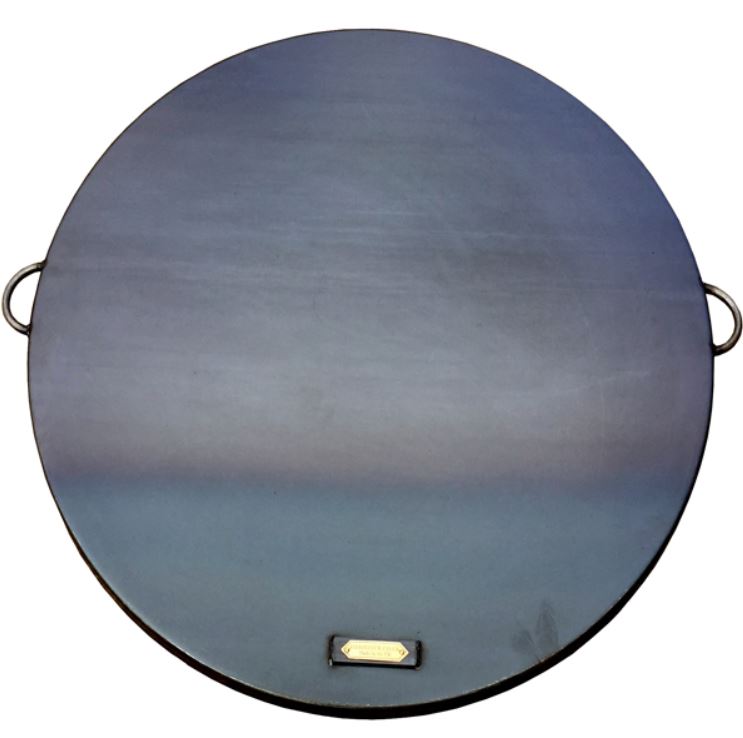
A "Heat Shield" or "Fire Mat" is a specialised accessory designed to reflect infrared radiation back up toward the pit.
-
The Pro Move: Ensure the mat is rated for the specific temperature of your pit and has an "air gap" or "aluminised" surface to deflect the heat away from the ground.
2. Creating a Permanent "Hearth"
If you have a dedicated spot for your fire pit, consider building a permanent base.
-
The Fix: Lay down a bed of fire-rated bricks or a thick layer of gravel/lava rock. These materials act as an insulator, absorbing the heat so it never reaches the vulnerable soil or stone beneath.
3. Use an Elevated Stand
Air is one of the best insulators. By simply raising the fire pit 15cm to 20cm off the ground using a dedicated metal stand, you allow cool air to circulate under the base. This "airflow gap" significantly reduces the amount of heat transferred to the surface below.
Summary Checklist for a Safe Surface:
-
Never place a fire pit directly on grass or wood without a barrier.
-
Check for moisture in your pavers before lighting a fire.
-
Invest in a stand to create an air gap.
-
Use a Heat Mat if you are using a portable pit on a deck.
Your outdoor space is an investment. Don't let a single night of fire lead to a permanent repair bill for your deck or patio.