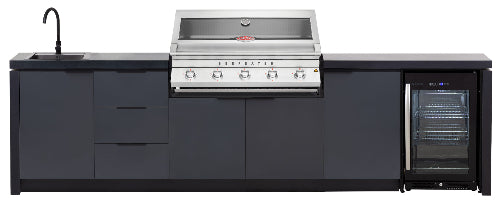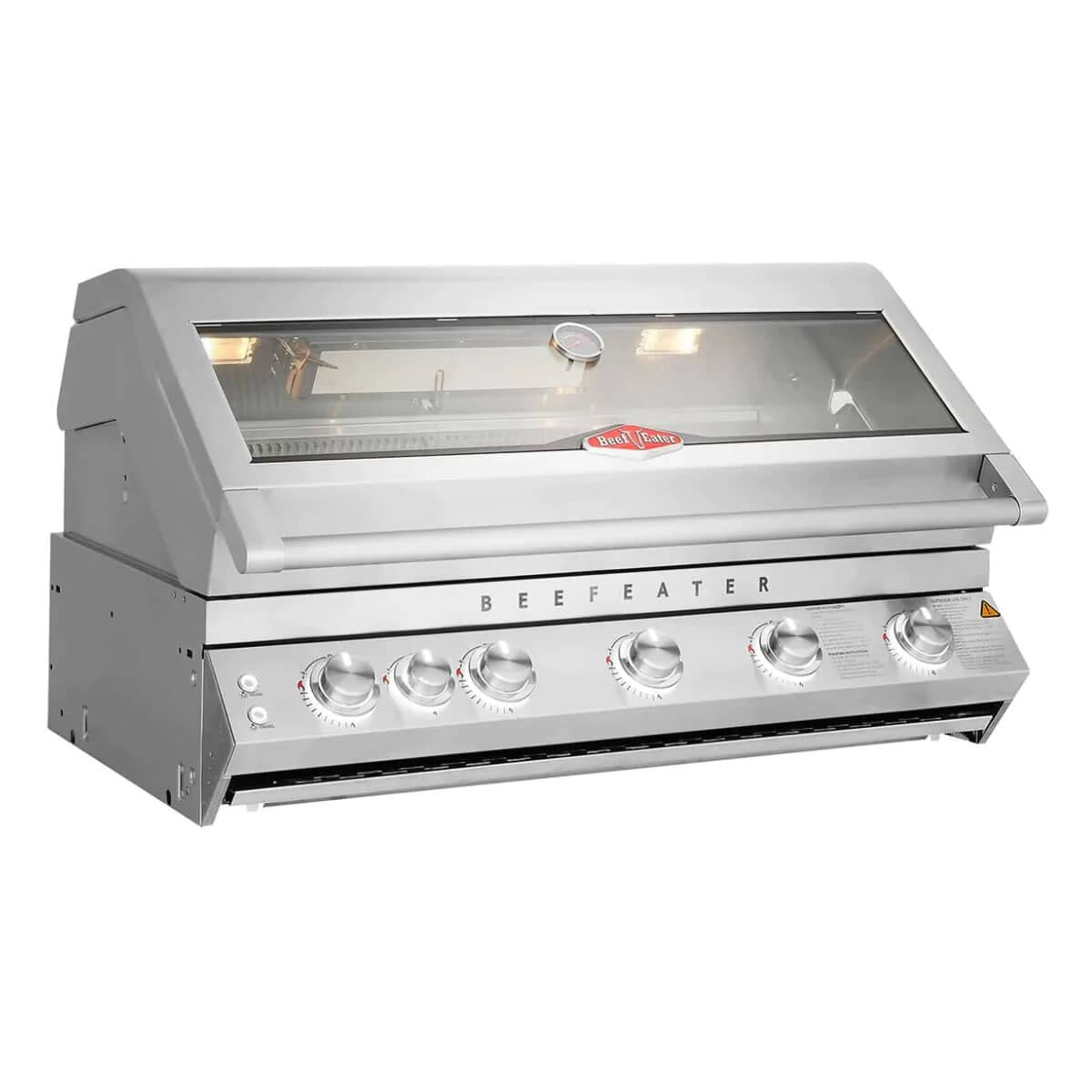


When designing a permanent outdoor kitchen, it is easy to get caught up in the aesthetics of stone and granite. However, the success of your kitchen depends on the "Performance Specs" of the grill head itself. To choose the right model, you must look past the stainless steel exterior and evaluate how a Gas BBQ handles the three pillars of outdoor cooking: volume, time, and upkeep.
1. Understanding Grill Capacity: Beyond the Measurements
In a built-in environment, "bigger" isn't always better, it's about usable space. When looking at capacity, consider the "Primary Cooking Area" versus the "Warming Rack."
-
The Crowd Factor: A standard 3-burner built-in head is ideal for a family of four. However, if you are building a permanent island, we typically recommend a 4 or 5-burner model. The extra width allows for "Zone Cooking," where you can sear steaks on one side while slow-roasting vegetables on the other.
-
Vertical Capacity: Because built-in BBQs often feature higher hoods, check if the model can accommodate a Rotisserie Kit. This expands your capacity by allowing you to cook large joints of meat or whole chickens above the grates, freeing up the grill surface for side dishes.
2. Heat-Up Dynamics: Efficiency in a Fixed Structure
One of the major advantages of a built-in BBQ is heat retention. Because the grill head is often "hugged" by masonry or an insulated jacket, it creates a thermal mass that holds temperature exceptionally well.
-
The 15-Minute Rule: A high-quality gas built-in head should reach 250°C within 10 to 15 minutes. High-performance models with infrared "Sear Stations" can reach cooking temperatures even faster.
-
Preheating for the Stone: If you plan on using a pizza stone inside your built-in BBQ, remember that while the air heats up quickly, the stone takes longer. Allow an extra 10 minutes of preheating to ensure the base of your food cooks as fast as the top.
3. The Cleaning Myth: Keeping Your Island Pristine
The biggest fear with a permanent BBQ is that "cleaning will be difficult because I can't move it." In reality, built-in BBQs are designed for easier maintenance than freestanding ones.
-
Front-Access Systems: Premium built-in heads feature a "Slide-Out Grease Tray" accessible from the front. You never need to reach behind the masonry or lift the unit to manage fat drippings.
-
The High-Heat Burn-Off: To clean the internal grates, simply turn all burners to high for 10 minutes after cooking. This carbonises food residue, which can then be easily brushed off with a stainless steel wire brush once the unit has cooled.
Expanded FAQ: Performance & Upkeep
How many burgers can I actually fit on a 4-burner built-in grill? As a general rule, a 4-burner grill provides roughly 3,000 to 3,500 square cm of space, which accommodates approximately 20 to 25 standard burgers. However, for a built-in kitchen, we suggest leaving 25% of the surface clear to allow for easy flipping and heat management.
Does a built-in BBQ take longer to heat up than a freestanding one? Usually, it is faster. Because the unit is recessed into a structure, it is shielded from the wind on three sides. Wind is the biggest "heat-thief" for any BBQ; by blocking it out, your built-in unit reaches temperature more efficiently and uses less gas.
Will the grease from the BBQ stain my outdoor kitchen countertops? This is a common concern with porous materials like limestone or light granite. To prevent staining, ensure your BBQ has a "drip-free" hood design and always pull the grease tray out carefully. We recommend sealing your stone worktops annually to prevent fat splatters from soaking in.
How do I clean the burners if they get clogged with marinades? In a built-in BBQ, the burners are protected by "Flame Tamers" or "Vaporiser Bars." These catch most of the drips. If a burner port does get blocked, you can easily remove the individual burner tubes (most are held in by a simple cotter pin) and clean the holes with a small paperclip or a soft brush.
Is it safe to use a pressure washer on my built-in BBQ? We strongly advise against this. Pressure washers can force water into the gas valves, igniters, and burners, causing permanent damage. Stick to warm soapy water for the exterior and a dedicated grill cleaner for the internal components.