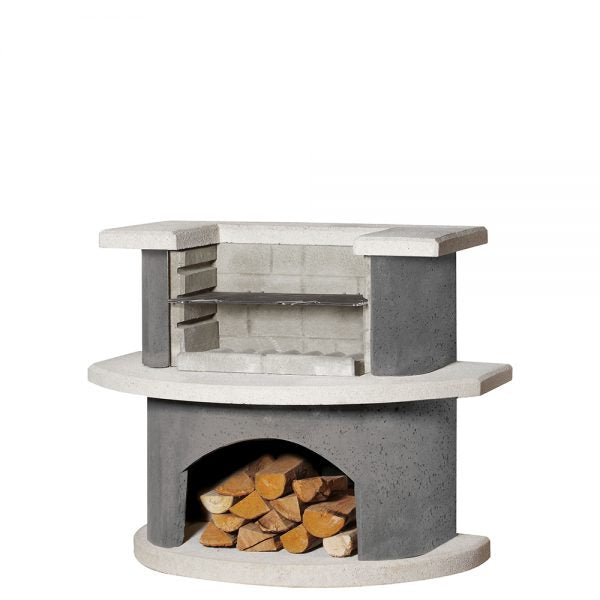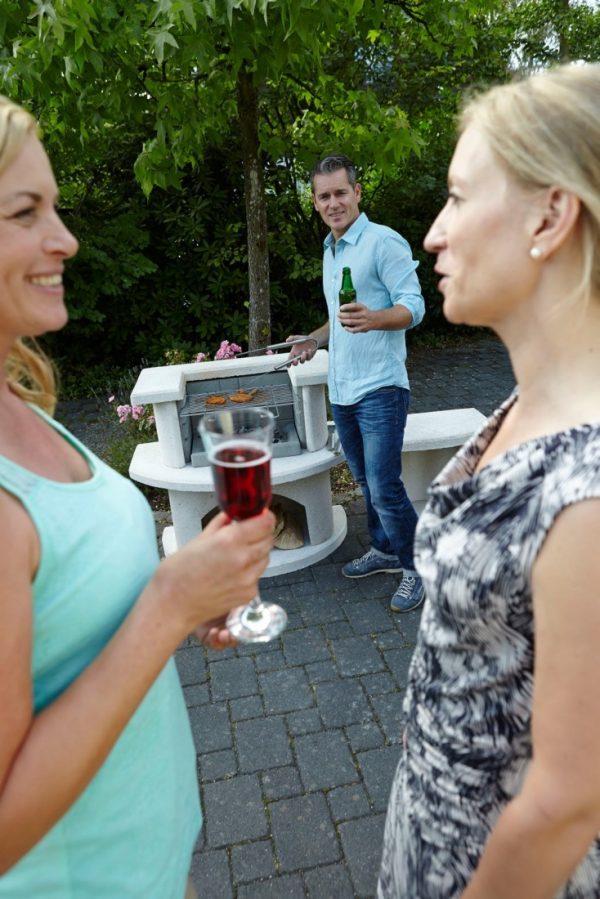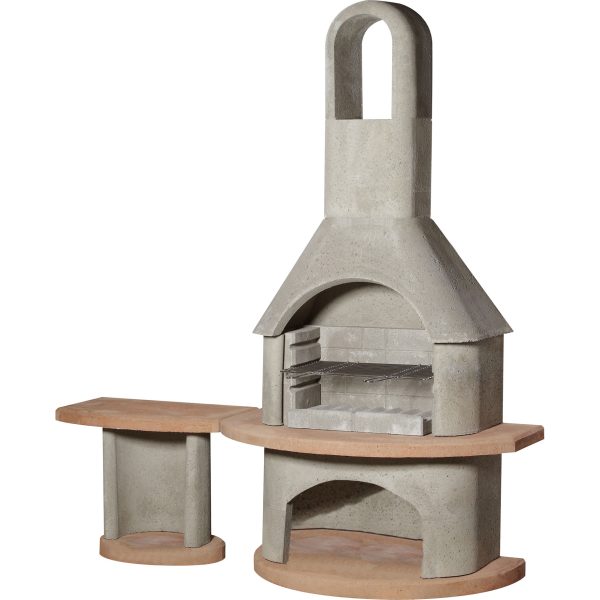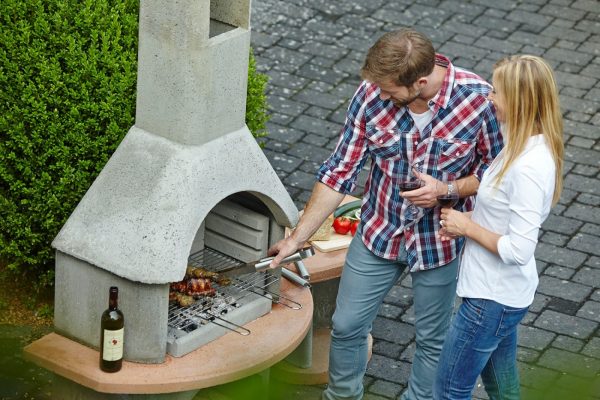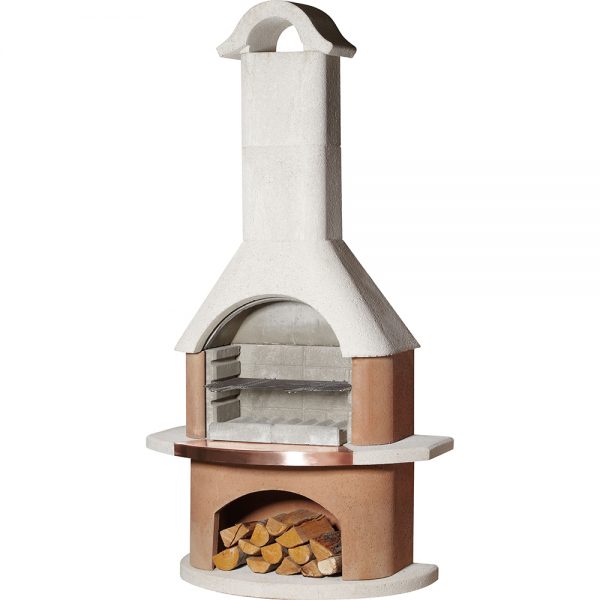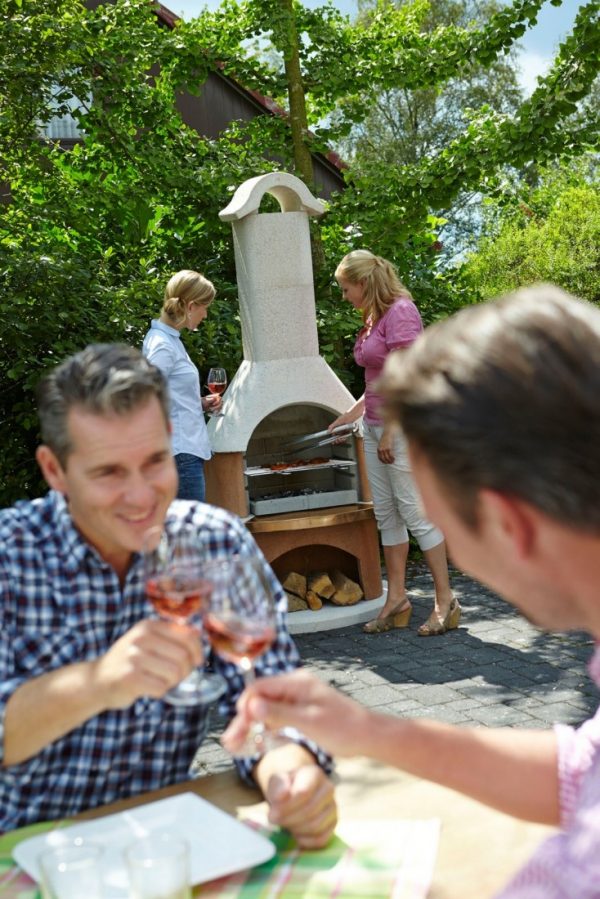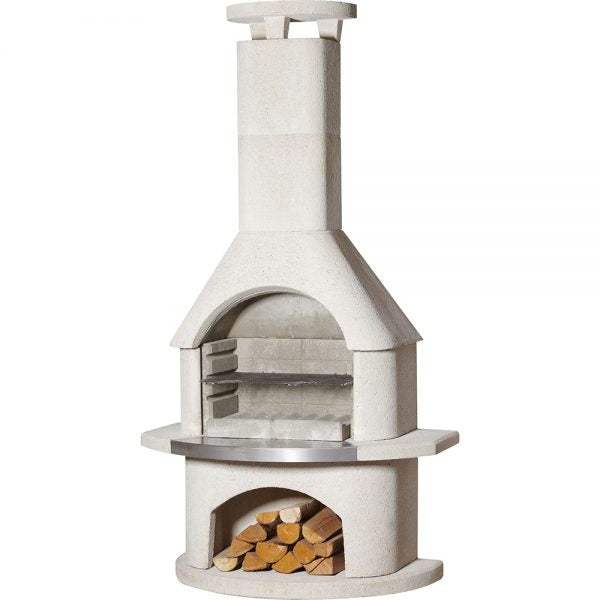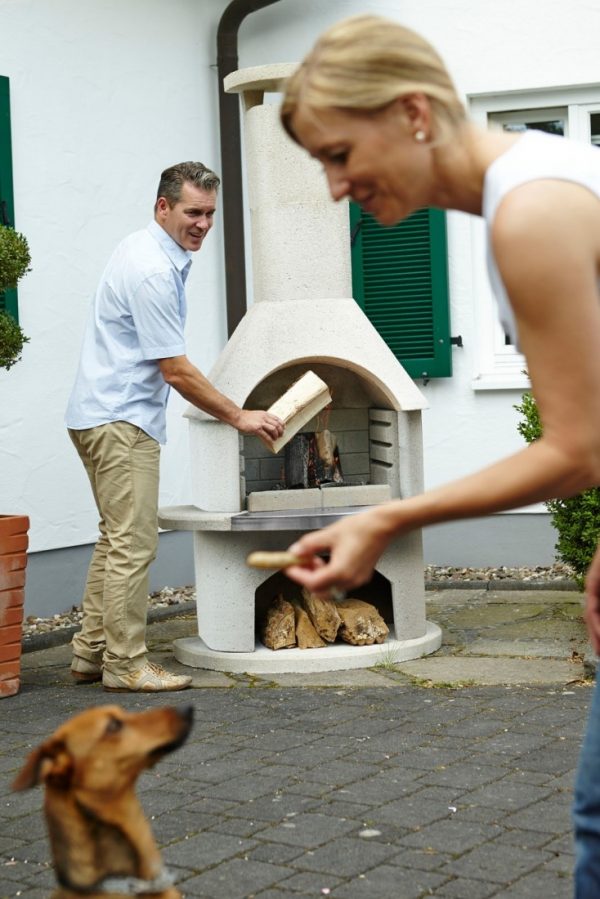


Choosing the right fuel isn't just a matter of flavour; it’s a matter of structural integrity. While a steel kettle can handle almost any fuel you throw at it, a masonry BBQ is a precision-engineered stone instrument that reacts differently to different energy densities.
At A Glance:
-
Wood for Flavour: Provides the authentic "smoky" profile and high flame for searing. Shop Amazon
-
Charcoal for Precision: Offers stable, predictable temperatures for long cooks. Shop Amazon
-
Dual-Fuel Options: Only use wood in units specifically rated with "Twin-Skin" or firebrick linings.
Direct Heating: Why can't all masonry BBQs burn wood?
Answer: Wood burns significantly hotter and more aggressively than charcoal. When wood combusts, it releases volatile gases that create tall, intense flames. If a BBQ is a "single-skin" refractory concrete model, this rapid temperature spike causes the stone to expand at an uneven rate. Without the "breathing room" provided by a double-skinned air gap or a firebrick lining, the internal pressure will result in structural cracks or "thermal shock" failure.
Always check your manual: if it says "Charcoal Only," a wood fire could permanently ruin the unit in a single session.
Technical Review: Energy Density & Calorific Values
To understand why wood is more "dangerous" for masonry, we have to look at the chemistry of the fuel.
1. Lumpwood Charcoal: The Refined Carbon
-
Energy Density: Approx. 28 to 32 MJ/kg.
-
The Science: Charcoal is wood that has already been "carbonised" (heated in a low-oxygen environment to remove water and gases).
-
Cooking Profile: Because the "volatile" components are gone, charcoal burns with a steady, glowing heat and very little flame. It is high-energy but "tame," making it safe for almost all masonry structures.
2. Seasoned Oak: The Raw Power
-
Energy Density: Approx. 15 to 17MJ/kg at 20% moisture.
-
The Science: While the per kg energy is lower than charcoal, the rate of release is much faster. The burning of cellulose and lignin creates a massive volume of hot gas and secondary combustion (flames).
-
Cooking Profile: In a wood-rated masonry BBQ, this creates a "furnace effect." The radiant heat from the flames is much higher than charcoal, allowing for 400°C+ temperatures perfect for pizza, but lethal for non-rated concrete.
The "Active Fire" vs. "Coal Bed"
Enthusiasts on r/UKBBQ often debate the "authentic" taste. Here is the technical breakdown:
-
The Smoke Ring: Wood contains organic compounds (like syringol and guaiacol) that are released in the smoke. Charcoal, being pure carbon, provides very little "smoke flavour" unless you add wood chunks.
-
The Moisture Factor: Wood fires create a more "humid" cooking environment as the remaining 15 to 20% moisture in the logs evaporates. This is why wood-fired roasts often stay juicier than those cooked over dry charcoal.
Expert Tip: The "Hybrid" Approach
If your masonry BBQ is wood-rated, we recommend the Hybrid Method:
-
Build a base of Lumpwood Charcoal for a steady, long-lasting heat bed.
-
Toss one or two small splits of Seasoned Oak or Ash on top every 30 minutes.
This gives you the temperature stability of charcoal with the superior flavour and infrared "boost" of a live wood flame.
Fuel Comparison: At a Glance
|
Feature |
Lumpwood Charcoal |
Kiln-Dried Oak |
|
Combustion Type |
Incandescence (Glow) |
Flaming (Active Fire) |
|
Max Temperature |
Steady 250 to 300°C |
Spikes of 500°C+ |
|
Ignition Time |
15 to 20 Minutes |
30 to 40 Minutes (to reach coals) |
|
Ash Volume |
Low 1 to 3% |
Moderate 3 to 6% |